2026 LandCruiser 300 Sahara: The Specs, and What They Mean on a Road Trip
4 min read
In this guide
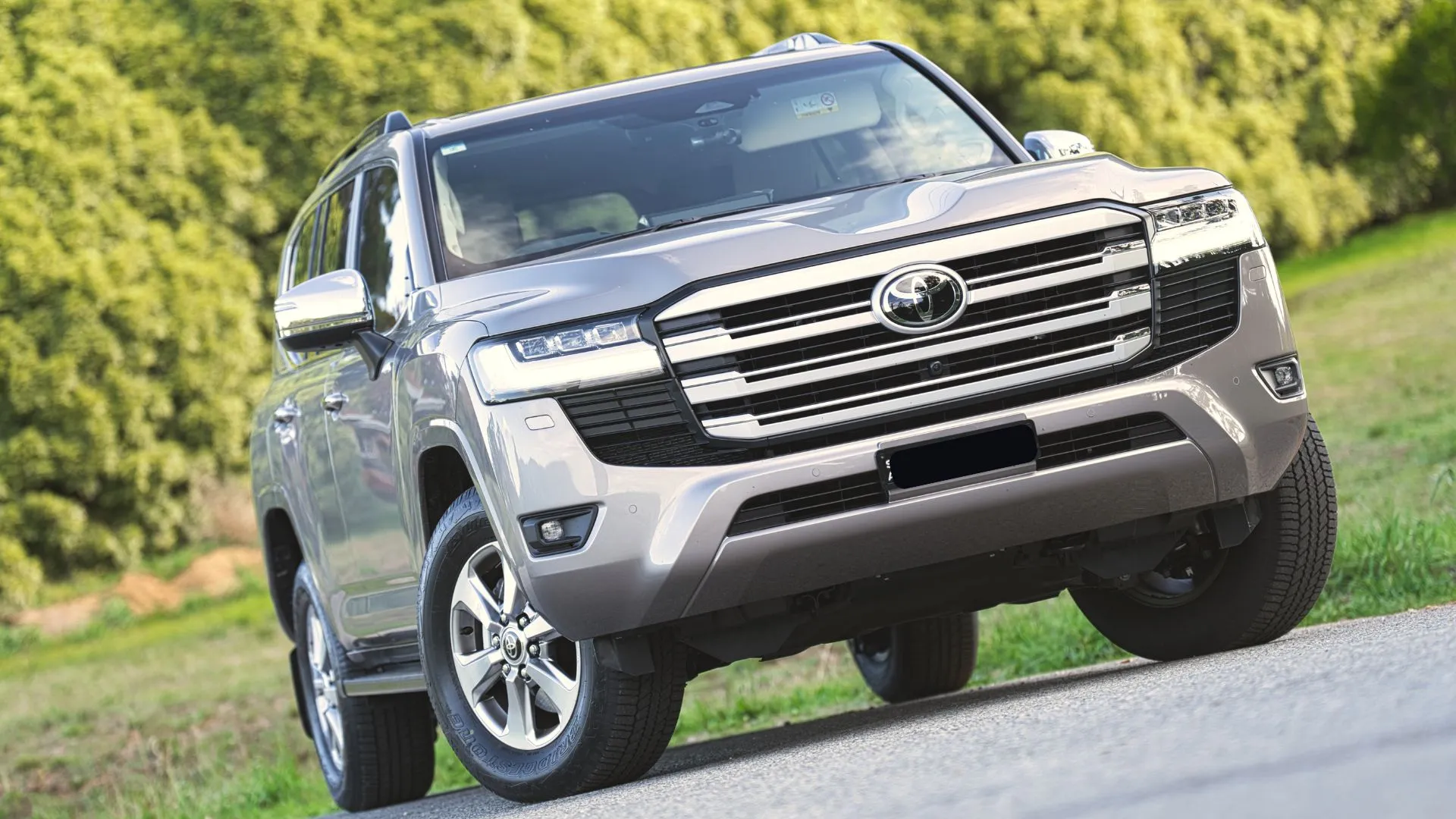
After years of wanting one, we finally have a LandCruiser. Ours is a 2026 LandCruiser 300 Sahara in Dusty Bronze, and it is now the car every trip on this site gets planned around.
Plenty of people will tell you what the specifications are. This is an attempt at something more useful: what each of those numbers actually changes when you are a long way from anywhere.
The numbers
| Engine | 3.3-litre twin-turbo V6 diesel |
| Power | 227 kW @ 4000 rpm |
| Torque | 700 Nm @ 1600 rpm |
| Transmission | 10-speed automatic, full-time 4WD |
| Fuel use (combined) | 8.9 L/100 km claimed |
| Fuel capacity | 80 L main + 30 L auxiliary |
| Braked towing | 3500 kg (750 kg unbraked) |
| Ground clearance | 245 mm |
| Seats | 7 |
| Kerb weight | 2630 kg |
| Dimensions | 4980 mm long, 1980 mm wide, 1950 mm high, 2850 mm wheelbase |
| Warranty | 5 years / unlimited km |
| Servicing | Every 6 months or 10,000 km |
List price sits just under $140,000 before on-road costs, though it has moved more than once — check the current figure before you plan around it.
What the numbers mean out on the road
700 Nm at 1600 rpm
This is the specification that matters most and the one people pay least attention to. Peak torque arriving at 1600 rpm means the engine is doing its best work barely above idle.
In practice that is the difference between a car that has to be worked and one that does not. Overtaking a road train, climbing out of a gorge, pulling away from a beach car park on soft sand — the LC300 does all of it without downshifting through half the gearbox first. On a long drive that is less about performance than about how tired you are at the end of the day.
110 litres of fuel
The main tank holds 80 litres and there is a 30-litre auxiliary tank behind it. At the claimed 8.9 L/100 km that is a theoretical range well over 1000 km, and even at realistic touring consumption — loaded, with a roof rack, into a headwind — you have a very long way between fills.
This is the single most relevant number for Australian travel. It is what makes the drive to Coober Pedy or across the Nullarbor a matter of planning rather than anxiety. It means you can pass a servo charging outback prices and reach the next one on principle.
3500 kg braked towing
The Sahara will tow 3500 kg braked, 750 kg unbraked — the top of the ladder for a vehicle you can drive on a normal licence, and enough for essentially any caravan you would realistically buy.
Worth saying: towing capacity is only half the sum. Once you hang three and a half tonnes off the back you are into gross combination mass, tow ball download and payload, and those limits bite well before the towing number does. Do the arithmetic with your actual van and your actual family in the car before you assume the headline figure applies to you.
245 mm of ground clearance
Enough to make beach tracks, station roads and washed-out gravel a non-event rather than a decision. It is not a rock-crawler and the Sahara is not the variant you would buy if that were the plan — but for the kind of touring we do, which is long distances on indifferent roads, it is more than the terrain asks for.
2630 kg
The other side of the ledger. The Sahara is not a light vehicle, and it drives like what it is. It is enormous in a multi-storey car park, it will not thank you for a tight suburban roundabout, and the real-world fuel figure sits above the claimed one.
If most of your driving is city driving, this is the wrong car and there is no arguing otherwise. It earns everything back on the open road.
Inside the Sahara
The Sahara sits near the top of the range, and the equipment reflects that: JBL audio, four-zone climate, a cool box in the centre console, heated and ventilated seats, and the full suite of rear-passenger comforts that matter on a long drive with a child in the back. The myToyota app handles remote functions from your phone.
It is a seven-seater, though as with most seven-seaters the third row is a compromise you make occasionally rather than live in.
The full walk-around — exterior, interior, towing setup and the Sahara-specific details — is in the video:
Servicing is the number people forget
Six months or 10,000 km, whichever comes first. That is a shorter interval than a lot of cars and it is worth building into your thinking, because if you drive the distances that justify buying a LandCruiser in the first place, you will hit 10,000 km well before the six months are up.
The warranty is five years and unlimited kilometres, which is the right shape for a vehicle bought to cover ground.
If you want to see the more driver-focused end of the 300 Series, we also filmed the GR Sport V2 — a cinematic, no-talking look at the other side of the range:
Specifications above are for the Australian-delivered 2026 LC300 Sahara and were current when this was written. Toyota changes pricing and equipment between model years, so confirm against Toyota Australia or a current listing before you buy anything.
Filed under